Search for what kills mold and you get a list of bottles. This guide goes through the common ones, then explains why the question itself is slightly off. In a house, the goal is not dead mold. It is no mold and a dry material.
Kill versus remove
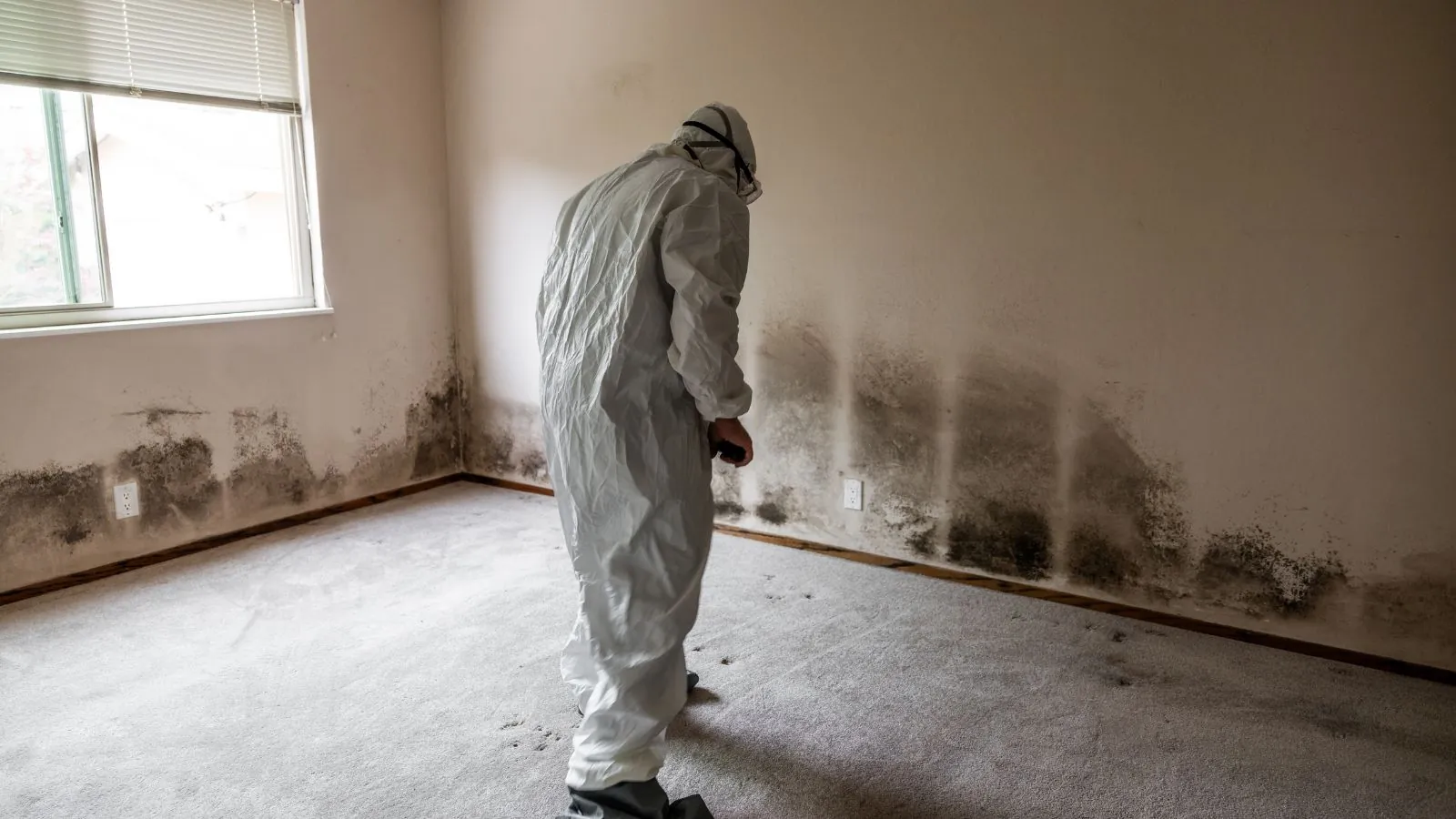
Dead mold is still mold. The fragments and spores of a killed colony remain on the surface or inside the material. On a hard surface you can wipe them away, so killing and removing happen together. In drywall, carpet or insulation, killed growth stays embedded.
That is why industry practice under the S520 standard focuses on physical removal. Porous materials with growth are cut out. Hard surfaces are cleaned. Chemicals play a supporting role.
Common products compared
| Product | Hard surfaces (tile, glass) | Porous surfaces (drywall, wood) | Notes |
|---|---|---|---|
| Detergent and water | Works with scrubbing | Cleans the surface only | The basic method. Dry afterward |
| Diluted bleach | Kills and removes staining | Does not reach below the surface | Fumes. Never mix with ammonia or acids |
| White vinegar | Mild effect, slower | Limited | Low hazard, lingering smell |
| Hydrogen peroxide, 3 percent | Works with contact time | Limited, may lighten finishes | Test a hidden spot first |
| Store-bought mold sprays | Vary by product | Vary | Read and follow the label |
Notice the middle column. None of these fixes mold that has grown into a porous material. They can make it look better for a while.
Using bleach sensibly
Bleach has a place on bathroom tile and other hard surfaces. Ventilate the room, wear gloves and eye protection, and follow the dilution on the label. Do not mix bleach with other cleaners. Combining it with ammonia or acidic products releases dangerous gas.
On drywall, bleach mostly adds water. The surface lightens, the paper facing gets wetter, and growth resumes from below.
What actually stops mold
- Fix the leak, whether it is plumbing, roof, siding or condensate
- Dry the material completely, checked with a moisture meter
- Remove porous materials that have growth in them
- Keep indoor humidity down with ventilation and dehumidification
- Run bath and kitchen fans that vent outdoors
Moisture control is the only lasting method. Everything in a bottle is temporary without it.
What not to do
Painting over mold with ordinary paint hides it for a season. Ozone machines are sometimes sold for odor, but they do not remove growth from materials and should never run in occupied rooms. Fogging a room without removing affected materials leaves the source in place.
A Septic And Humidity Note For Westport
Westport has no sewer service, according to the town's 2025 Housing Production Plan, so household drains lead to a septic system on the property. A septic tank depends on bacteria to break down waste. Normal household cleaning is fine, but if you are tackling a large cleanup, avoid sending buckets of strong disinfectant down the drain in one go. The Westport Board of Health is the local authority on septic questions.
The same plan describes minimal public water, which means most homes are on private wells. If you are mixing cleaning solutions with well water that carries iron or sediment, expect some staining that is not mold.
Finally, the setting works against you. With the Westport River on two sides and the coast on a third, summer air is damp, and a dehumidifier in the basement does more to keep mold away than any spray. Source types: the town housing plan and the Board of Health's role under town regulations.
When to stop cleaning and call
Call for an assessment when the growth is on drywall, ceiling tile, insulation or carpet. Call when it covers more than a small patch, when it returns after cleaning, when there is a musty smell with no visible cause, or when it followed a flood or sewage backup.
Stop scrubbing in those cases. Dry scrubbing or vacuuming with a household machine spreads spores to other rooms.
Keeping it from coming back
Once an area is clean and dry, prevention is routine. Keep basement humidity in check with a dehumidifier that drains to a sink or pump. Run the bathroom fan during a shower and for twenty minutes afterward. Leave a small gap between furniture and outside walls so air can circulate. Fix drips when you find them. A hygrometer costs little and shows whether a room is staying damp.
Health questions
We do not give medical advice. If anyone in the house has symptoms they think relate to mold, that is a conversation for a physician.
Our mold remediation page explains the professional process, and structural drying covers how materials are dried and measured. We serve Westport and nearby Acushnet and New Bedford.