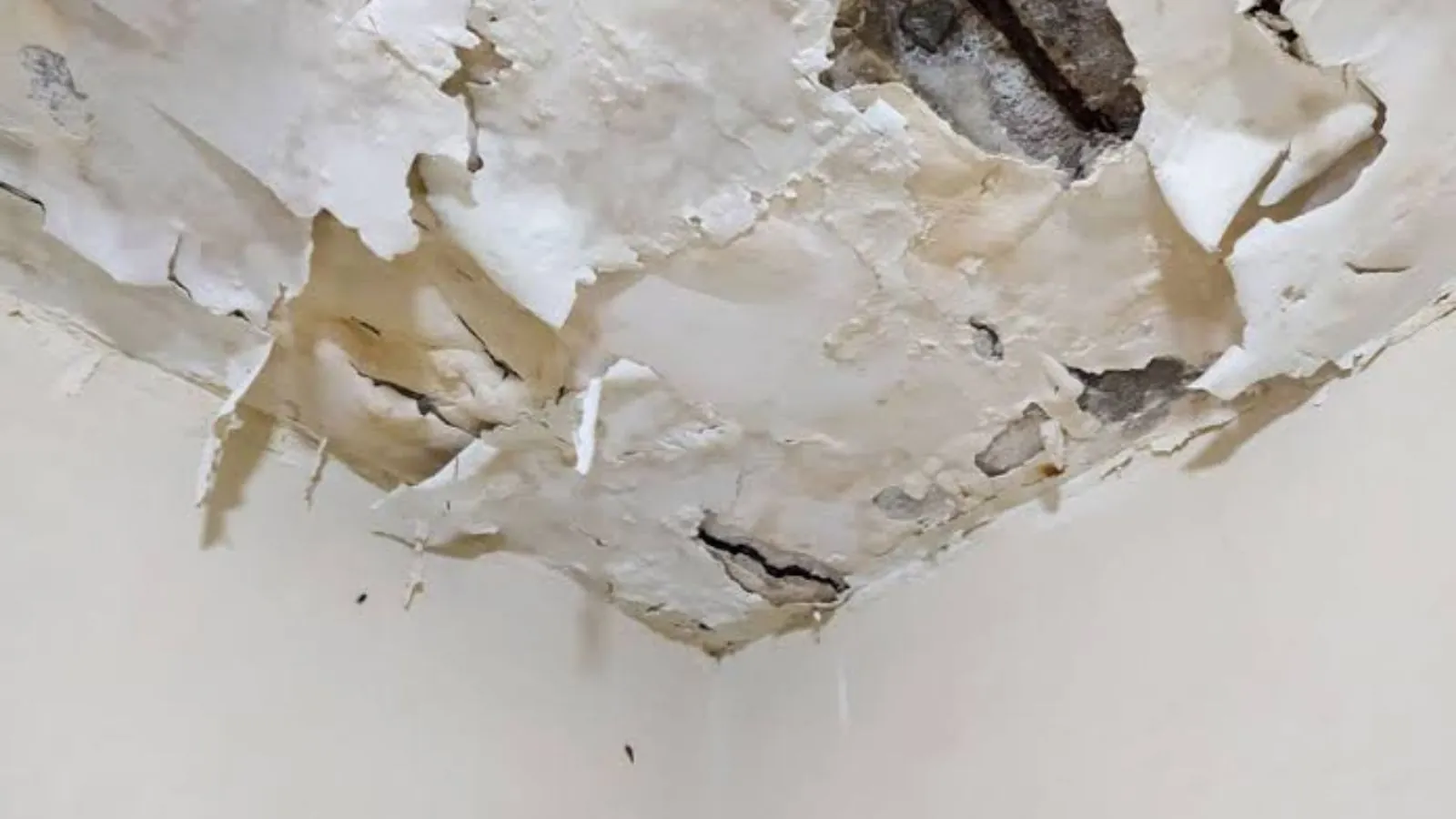
Wall and drywall water damage repair means finding how much of a wall is wet, drying or removing the affected drywall and insulation, and rebuilding the surface. In Westport, MA homes the wall may be modern drywall or old plaster on lath, and the repair differs for each.
What a wet wall looks like
- Paint that bubbles, blisters or peels in sheets
- A soft spot that gives when pressed, or a hole starting to form
- Baseboards swollen, stained or pulling off the wall
- A tide line of discoloration a few inches above the floor
- A stain that tracks down from a window, a ceiling or a fixture
A soft spot matters most. Drywall is gypsum between two paper faces. When the core is saturated it loses strength, and the paper is what mold feeds on.
Where the water came from
| Pattern on the wall | Likely source |
|---|---|
| Wet from the floor up, along the baseboard | Flooding across the floor, or a leak in the wall base |
| Stain below a window | Rain entering at the frame or flashing |
| Vertical streak from the ceiling | Leak above, see our ceiling page |
| Patch on a wall backing a bathroom or kitchen | Supply or drain line inside the cavity |
| Exterior wall, after storms | Siding or trim leak wetting the sheathing |
Siding leaks deserve a mention. Wind-driven rain behind shingles or clapboards soaks the wall from outside, and the inside shows nothing until the insulation is saturated. This turns up on kitchen walls and garage drywall alike.
Water from above is covered on the ceiling water damage repair page.
Dry it or cut it out?
Not every wet wall is torn out. The decision rests on a few facts.
- Clean water, caught in a day or twoBaseboards off, small holes at the base, air into the cavity. The drywall often stays.
- Insulated wallWet fiberglass does not dry in place. The drywall is cut to remove it.
- Contaminated waterDrywall and insulation are removed above the water line. No exceptions.
- Swollen, sagging or moldy drywallRemoved. It will not recover.
When drywall is cut, it is usually a straight flood cut a set height above the floor, which makes the patch clean and predictable.
Not sure if the wall can be dried?
We take readings, explain dry-in-place versus removal, and price it before starting.
How a wall is dried and repaired
- Take readingsA moisture meter and a thermal camera establish the height and width of the wet area.
- OpenBaseboards come off. Either vent holes are drilled or a section is cut out.
- RemoveWet insulation and failed drywall are bagged and taken away.
- DryAir movers and a dehumidifier dry studs, plates and sheathing to normal moisture content.
- RebuildNew insulation and drywall, taped and finished, primed, painted, baseboards reinstalled.
The drying stage is the monitored process on our structural drying page. Rebuilding before the framing is dry traps moisture in a closed wall, which is how mold ends up behind fresh paint.
Plaster walls in older houses
Plenty of Westport houses predate drywall. Many Main Road buildings have been in use since the 1800s, by the Westport Historical Society's account, and their walls are plaster over wood lath.
Plaster is denser and tolerates a single wetting better than drywall does. It also dries more slowly. The risk is the bond: wet lath swells, and plaster can crack or let go from it. Sound plaster is dried and kept. Loose sections are re-secured or cut out and patched with compatible material. Matching the texture of old plaster takes more skill than patching drywall.
Finding mold when the wall is opened
Sometimes a wall is opened for a small repair and there is growth on the back of the drywall. It means the wall has been damp for some time. Work stops, the source is identified, and removal follows our mold remediation approach under the S520 standard. Mold needs moisture, so fixing the leak comes first.
What to do before the wall is opened
- Fix or shut off the source first
- Move furniture and pictures away from the wall
- Do not use outlets or switches on a wall that is wet
- Do not sand or scrape bubbled paint in an older house without knowing what the paint is
What affects the cost
- Height and length of removalA two-foot flood cut along one wall or full-height replacement.
- Wall typePlaster costs more to repair and match than drywall.
- InsulationExterior walls add insulation removal and replacement.
- FinishMatching paint across a whole wall or room, plus trim work.
A sudden leak is often covered, and damage from long-term seepage often is not. Ask your insurer. When a pipe in the wall was the cause, see burst pipe water damage. We repair walls across Westport and in Acushnet and New Bedford.