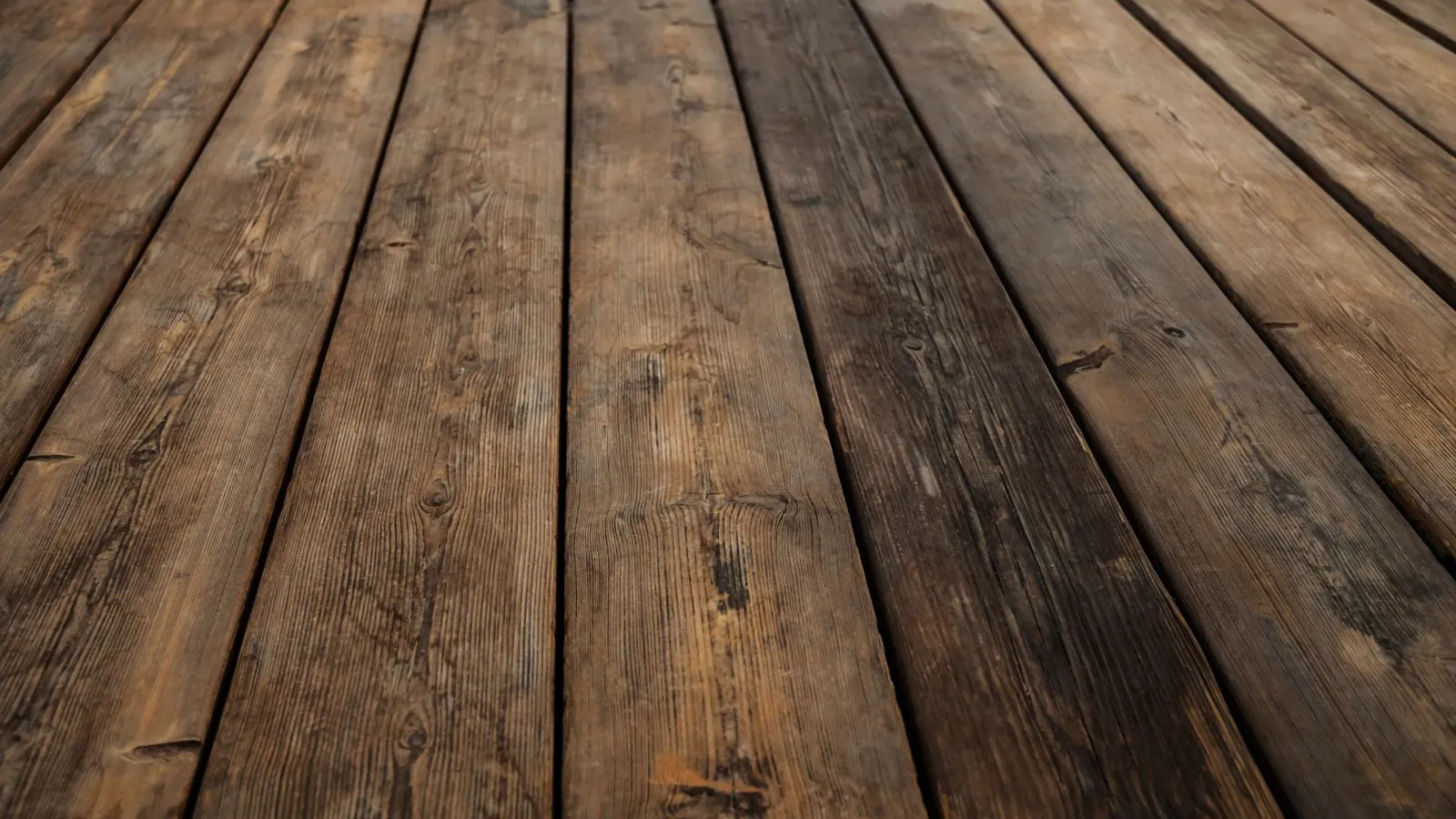
Hardwood floor water damage repair is the drying, assessment and repair of solid wood, engineered wood and laminate flooring after a leak. In Westport, MA that includes wide old boards in Main Road farmhouses and newer prefinished floors in recent construction, and the two behave very differently when wet.
What cupping and crowning mean
Wood swells across its width when it takes on moisture. The shape a board takes tells you where the water is.
- CuppingEdges higher than the center. The underside of the board is wetter than the top. The most common sign after a leak.
- CrowningCenter higher than the edges. Often the result of sanding a cupped floor before it dried.
- BucklingBoards lift off the subfloor entirely. Severe wetting, usually with nowhere for the wood to expand.
- Dark seams or stainsWater has sat at the joints long enough to mark the wood or the finish.
Cupping is not a death sentence. A cupped floor that is dried properly often flattens by itself over several weeks.
Where the water came from matters
- A washer valve that failed and ran across the floor wets boards from above and at the seams
- A condensate line or pipe leaking inside a wall wets the edge of the floor along that wall
- Moisture rising from a damp crawl space or basement cups an entire room evenly
- A dishwasher seep darkens the boards in front of it over months
That third case is common in older houses and is covered on our crawl space water damage page. Drying the top of a floor does little if the space below is still wet.
Solid wood, engineered wood and laminate
| Floor type | Response to water | Usual result |
|---|---|---|
| Solid hardwood, nailed | Swells, cups, can recover | Often saved, then sanded and refinished |
| Wide plank, older homes | Moves a lot, gaps afterward | Often saved, may need board repairs |
| Engineered wood | Thin top layer, can delaminate | Sometimes saved if caught early |
| Laminate | Fiberboard core swells at edges | Replaced in the wet area |
Laminate looks like wood and is not. Its core is compressed fiber, and once the edges swell the boards stay swollen. Replacement is the realistic answer.
Want to know if the floor can be saved?
We take readings on the boards and subfloor and explain the options and pricing.
How a wood floor is dried
- Measure boards and subfloorA moisture meter reads the flooring and the plywood or planks beneath, compared with a dry room.
- Remove surface waterAny standing water is extracted at once, including at the seams.
- Dry from abovePanel systems draw air through the seams between boards under suction, with dehumidifiers running.
- Dry from belowWhere there is access, air is directed at the underside of the subfloor from the basement or crawl space.
- Wait, then refinishSanding happens only after the wood returns to its normal moisture content.
The waiting is the hard part. Sand a cupped floor too early and the edges are cut down while still swollen. When the boards finish drying, those edges drop and the floor ends up crowned. A few extra weeks avoids that.
The drying equipment and monitoring are the same as on our structural drying page. Where the walls beside the floor are wet too, see wall and drywall repair.
Old floors in old houses
Many buildings along Main Road have been in continuous use since the 1800s, according to the Westport Historical Society. Floors in houses of that age are often wide boards nailed directly to the joists with no subfloor. They dry faster from below because the underside is exposed, but they also show gaps afterward.
Humidity swings on the coast add seasonal movement on top of any leak. A floor that looked flat in a humid August may gap in a dry February. We compare readings with an unaffected room so that normal seasonal movement is not mistaken for damage.
Repair, refinish or replace
Once dry, the floor is assessed board by board. Boards that split, stained through or stayed loose are replaced and woven into the existing floor. A full sand and refinish blends the repair. If more than about a third of a room is damaged, replacing the room is often the more sensible choice.
What to do in the first day
- Blot standing water off the boards right away, including along the seams
- Take up rugs and mats so the wood can breathe
- Keep the room at normal temperature. Do not aim heaters at the floor, since fast drying cracks boards
- Do not sand, screen or refinish anything yet
What affects the cost
- Floor typeSolid wood drying versus laminate replacement.
- Area and roomsFinish continuity can pull adjoining rooms into the refinish.
- Access belowAn open basement ceiling speeds drying.
- RefinishingSanding and finishing are a separate stage after drying.
Sudden leaks are often covered by homeowners insurance. Ask your insurer how it treats matching and refinishing. We serve Westport and nearby Acushnet and New Bedford.