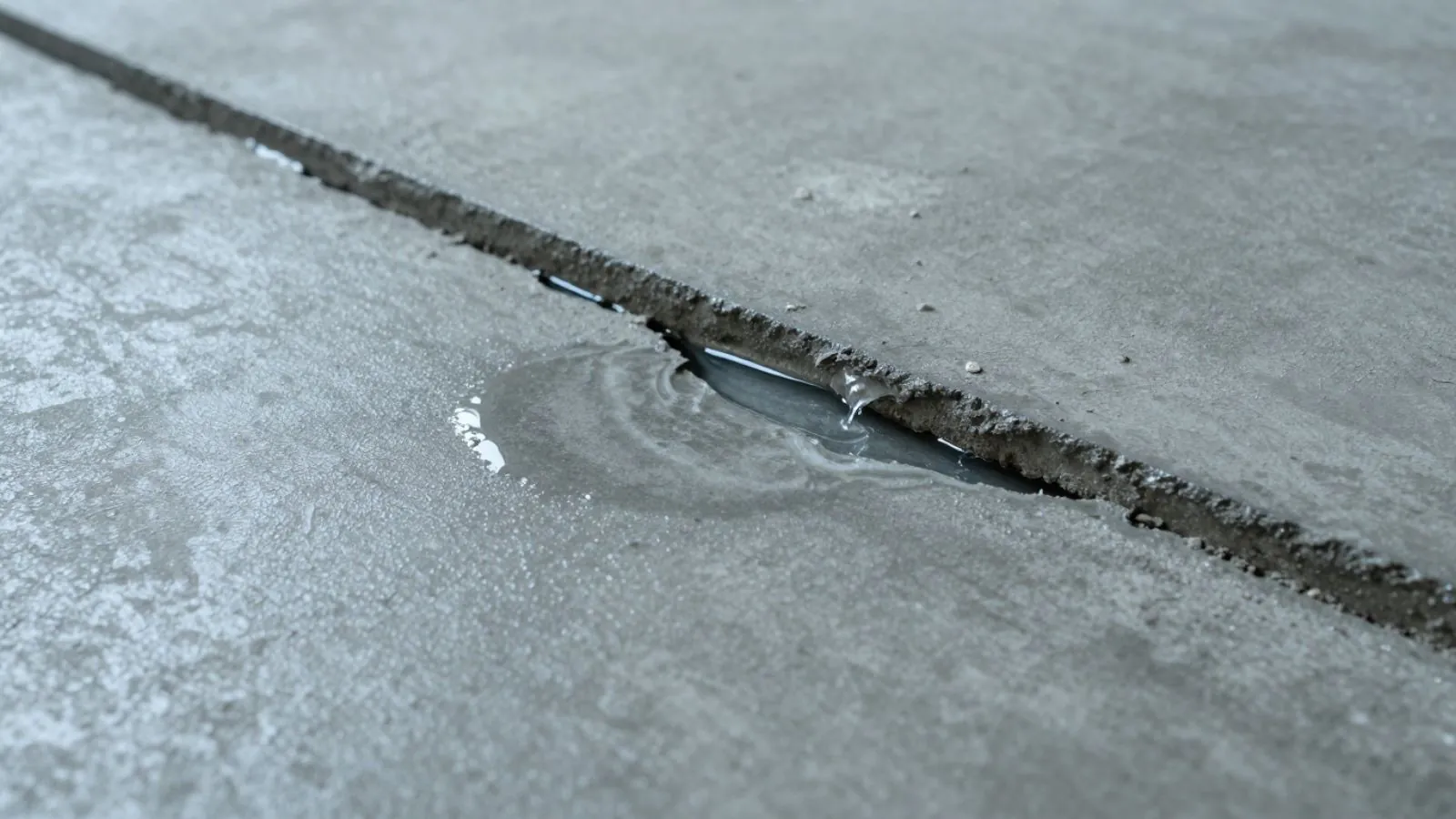
Slab leak water damage cleanup is the drying and repair of floors and walls after a water line beneath a concrete slab leaks. A plumber or leak detection specialist finds and fixes the pipe. We handle the water that came up into the building. If water is actively coming through a floor in your Westport home, the line is open 24/7.
Shut off the supply at the well pump breaker or main valve. If the wet area is spreading toward outlets at floor level, keep clear and call the electric utility if you cannot reach the panel from a dry spot.
Why is my floor wet when nothing is leaking?
That question is how most slab leaks are first described. There is no dripping pipe to point at. People notice other things:
- A patch of floor that feels warm underfoot, from a hot water line below
- Carpet that is damp in the middle of a room, away from any fixture
- Flooring that lifts, darkens or smells along one wall
- The well pump cycling when no water is being used
- Water appearing at the joint where slab meets wall
The trade name for the cause is a slab leak. The trade name for the fix on our side is drying the slab, the flooring and the wall bases. If the symptoms above match, the next step is a plumber's pressure test.
Slab leak emergency or slow seep?
Most slab leaks are slow. A few are not. A line that fails completely can push water across a floor in minutes, and a hot line leaking for weeks can saturate the fill under the slab so that water wicks up over a wide area. Treat it as urgent if water is visibly spreading, if flooring is lifting across a room or if the pump will not stop running.
How common is this in Westport?
We have no local figure for how many Westport houses sit on slabs, so we will not claim one. What can be said is how the problem occurs when it does. It affects slab-on-grade houses, additions built on slabs, converted garages and finished basements with plumbing run beneath the floor.
One local detail does apply. With a private well there is no water bill to reveal a hidden leak. The signal is the pump running more than it should. If yours cycles with every tap closed, have the system pressure tested.
Wet floor and no visible leak?
We explain how the wet area is mapped and what drying a slab involves before any work starts.
Drying after a slab leak
Concrete holds a great deal of water and gives it up slowly. Flooring laid on top traps it there.
- Map the moistureMeters and thermal imaging show the wet area of slab and how far up the walls water has wicked.
- Uncover the slabWet carpet, pad, laminate or wood over the affected area is lifted so the concrete can release moisture.
- Open wall basesBaseboards come off, and drywall is cut where the bottom plate and wall are wet.
- Dry with dehumidificationLGR dehumidifiers and air movers run for days. Concrete is checked with a meter suited to it.
Timing matters around the plumbing repair. If the plumber breaks the slab to reach the pipe, drying continues after the patch is poured. If the line is rerouted overhead instead, drying can start at once.
Flooring is the usual casualty. Carpet pad is replaced. Laminate swells and does not recover. Glue-down wood may release. See our pages on carpet water damage and hardwood floor repair for what can be kept. Persistent dampness in walls is covered under wall and drywall repair.
What to do while the leak is being found
- Leave the well pump or main valve off except when you need water
- Turn off the water heater if the warm spot suggests a hot line
- Pull back wet rugs and move furniture off the damp area
- Do not lay new flooring yet. The S500 industry standard calls for the slab to reach a verified dry reading first
What drives the cost
- Duration of the leakLong leaks wet a wider area of slab and wall.
- Hot or cold lineHot water spreads moisture further and damages adhesives.
- Floor coveringTile may stay. Wood, laminate and carpet pad usually do not.
- Repair methodA slab opening adds patching and longer drying.
Insurance treatment of slab leaks varies widely. Some policies cover the water damage and access but not the pipe, and long-term seepage is often excluded. Ask your insurer. We take these calls from Westport, New Bedford and Acushnet.