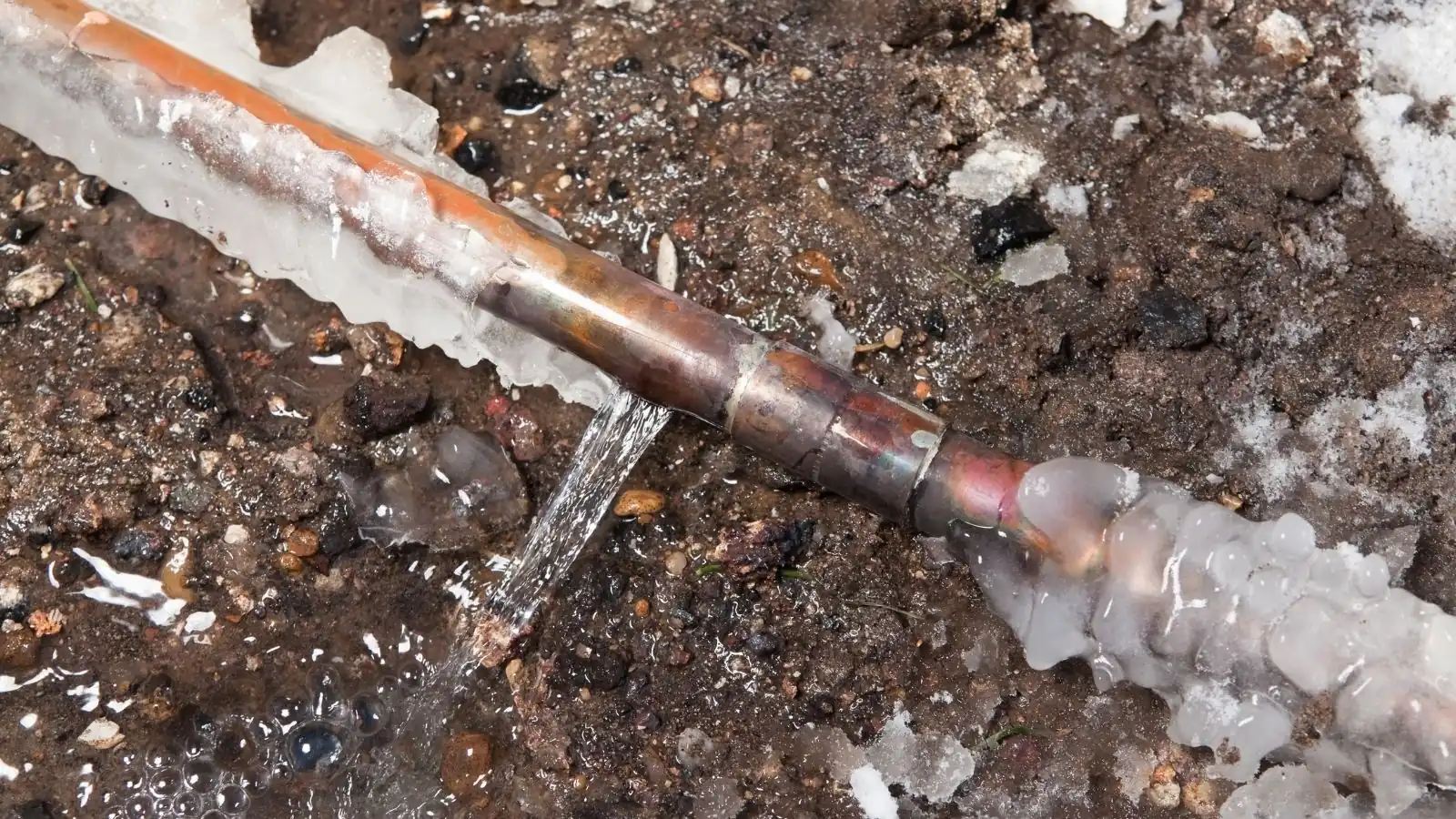
Burst pipe water damage is what happens when a pressurized supply line splits, a fitting fails or a hose lets go, and water runs under pressure until someone stops it. If that is happening in your Westport home, our line is open 24/7. Your first move is the shutoff, and we can talk you through it.
On a private well the house has no street meter. Flip the breaker marked for the well pump, then close the valve after the pressure tank. On the Fall River water line along Route 6 in North Westport, the main valve is usually where the service enters the building.
Burst pipe: what to do in the first ten minutes
- Kill the supplyWell pump breaker off, then the valve at the pressure tank. On town water, close the main valve.
- Drain the linesOpen a cold tap on the bottom floor of the house so the remaining pressure bleeds off there instead of through the break.
- Protect powerIf water is near outlets or the panel, stay out and call the electric utility. Do not stand in water to reach a breaker.
- Move and photographLift rugs and furniture, then take photos of the break and every wet room before anything is moved further.
A plumber repairs the pipe. We handle everything the water touched. Many callers need both at once, and the two jobs do not get in each other's way.
Why a well keeps a burst pipe running
A well pump does not know the difference between a filling bathtub and a split line in the ceiling. It keeps cycling as long as it has power, which is why an unattended break in a well-supplied house can run for hours. Roughly 7 percent of Westport housing units are seasonal, by Census estimates in the town housing plan, and an empty summer house with the pump left on is the worst case.
The Massachusetts Division of Insurance says burst pipe damage is typically covered only if the home was properly heated and not left unoccupied. If your place sits empty for part of the year, ask your insurer what your policy requires. Our frozen pipe page covers the winter version of this problem.
Where the water goes
Pressurized water travels. A break under a kitchen sink soaks the cabinet base, runs under the floor and shows up as a stain on the ceiling below. A break in an upstairs wall fills the cavity first and comes out at the baseboard.
- Under a sink: cabinet floors and toe kicks swell, see kitchen water damage
- Inside a wall: insulation holds water against the studs and the back of the drywall
- Above a ceiling: drywall sags and can drop, so stay out from under a bulge
- Across a floor: water finds seams and reaches the subfloor in minutes
Water still spreading?
Call now. We explain what the cleanup involves and how it is priced before work begins.
How the cleanup runs
We start by extracting standing water, then use moisture meters and a thermal camera to find where it traveled. Wet insulation comes out because it cannot be dried in place, which is the approach the ANSI/IICRC S500 standard sets out. Baseboards are pulled and small openings are cut so air can move through the cavity.
Air movers and LGR dehumidifiers then run for several days, with readings taken on each visit. Drying is finished when the framing is back to its normal moisture content, not when the surface feels dry. After that, wall and drywall repair puts the room back together.
What moves the cost
- How long it ranTwenty minutes and six hours are different jobs.
- Where it brokeAn upstairs break damages two floors and the ceiling between them.
- What got wetHardwood, cabinets and insulated walls take more labor than tile on slab.
- RebuildDrying alone costs less than drying plus new drywall, paint and flooring.
We take burst pipe calls across Westport, from Central Village to the Route 6 corridor, and from Acushnet and New Bedford.