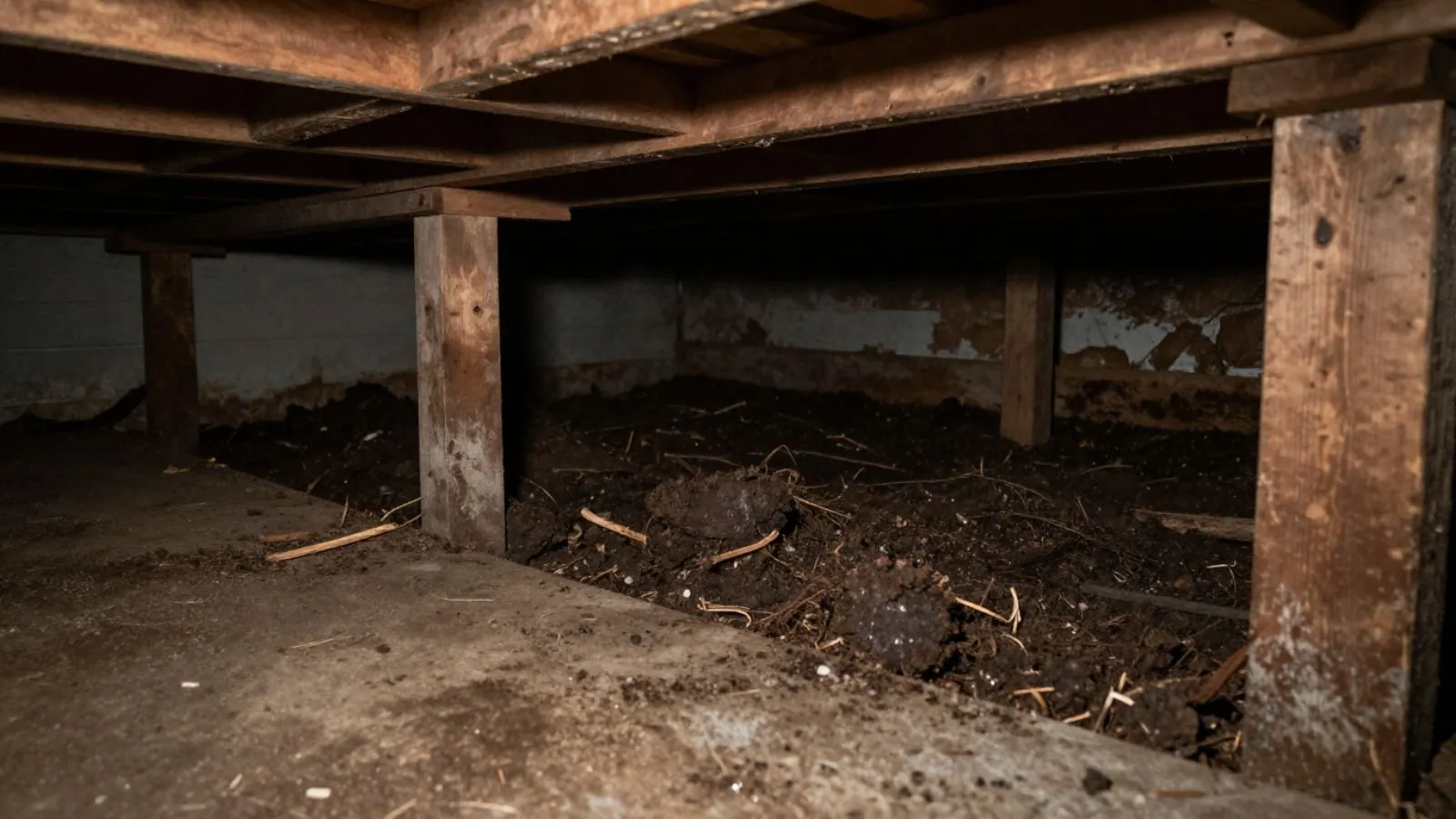
Crawl space water damage cleanup means removing water from the void beneath a house, taking out insulation and debris that got wet, and drying the floor framing from below. In Westport, MA it comes up after plumbing leaks, after heavy rain and, near the river and harbor, after high water.
Do not crawl into a wet space where wiring, a pump or ductwork may be energized. Look from the hatch with a flashlight and call.
How water gets under a house
- Plumbing aboveA supply or drain line under a bathroom or kitchen leaks onto the ground and insulation below.
- Groundwater and rainWater enters through the foundation wall or rises from the soil after long wet spells.
- Outdoor linesA broken hose bib, irrigation line or backflow device floods the space from outside.
- Tidal and river waterLow-lying coastal houses can take water under the floor during surge.
The irrigation case surprises people. A failed backflow preventer or a split line at the foundation can put hundreds of gallons under a house while every indoor tap is closed.
Signs from inside the house
You rarely see crawl space water directly. You notice what it does to the rooms above.
- Floors that feel cold, damp or slightly soft
- Hardwood cupping across a whole room instead of near one fixture
- A musty smell that is stronger at floor level and in closets
- Higher indoor humidity that the air conditioner cannot control
- Insulation hanging down when you look through the hatch
Whole-room cupping is the clearest clue. Moisture rising evenly from below swells the underside of every board. Our hardwood floor page explains the mechanism.
The coastal version
Elevated houses near the water are built to let surge pass beneath them. The town's resilience study notes that permanent structures on the Let side of East Beach stand on piles. Water under such a house is expected in a storm, but what it leaves behind still needs dealing with: salt, silt, soaked insulation and wet framing.
Away from the shore, we have no figure for how many Westport homes sit on crawl spaces instead of basements. Where a house has one, the mechanisms on this page apply.
Wet insulation or standing water below?
We explain what comes out, how the framing is dried and what it costs before starting.
How a crawl space is cleaned up and dried
- Pump and extractStanding water is pumped out. The discharge point is chosen so it does not run back in or onto a septic field.
- Remove wet materialSoaked fiberglass insulation, fallen vapor barrier and debris are bagged and taken out.
- Clean if contaminatedAfter a drain leak or outdoor flooding, framing and soil surface are treated accordingly.
- Dry the framingAir movers and a dehumidifier run in the space, with moisture readings on joists and subfloor.
- Check for growthJoists are inspected for mold before new insulation is installed.
Wet fiberglass does not recover. It sags away from the subfloor, holds water against the joists and stops insulating. Replacing it is part of nearly every crawl space job.
What we do and do not do
We remove water, dry the structure and deal with mold on the framing, following the approach on our mold remediation page. We do not install drainage systems, regrade yards or waterproof foundations. If water returns with every storm, a drainage or foundation contractor needs to address the cause, and we will say so plainly.
Septic systems are part of this conversation in Westport, where the town has no sewer service. A crawl space leak from a drain line is contaminated water. The steps on our sewage backup cleanup page apply to it.
What to do before anyone goes under the house
- Shut off the water if a pipe or outdoor line is the source
- Switch off power to any pump, outlet or ductwork heater in the space, from the panel
- Keep children and pets away from the hatch
- Do not enter standing water. The published S500 standard classes water from soil and outdoor sources as contaminated, and the cleaning steps reflect that
What affects the cost
- Height and accessA two-foot space with one small hatch takes longer than one you can kneel in.
- Area of insulationRemoval and replacement are priced by how much is wet.
- Water typeDrain and floodwater add cleaning and protective steps.
- Framing conditionMold or decay on joists widens the scope.
Coverage depends on the cause. A sudden pipe break is often covered, and groundwater or flood usually is not without flood insurance. Ask your insurer. We serve Westport and nearby Acushnet and New Bedford.