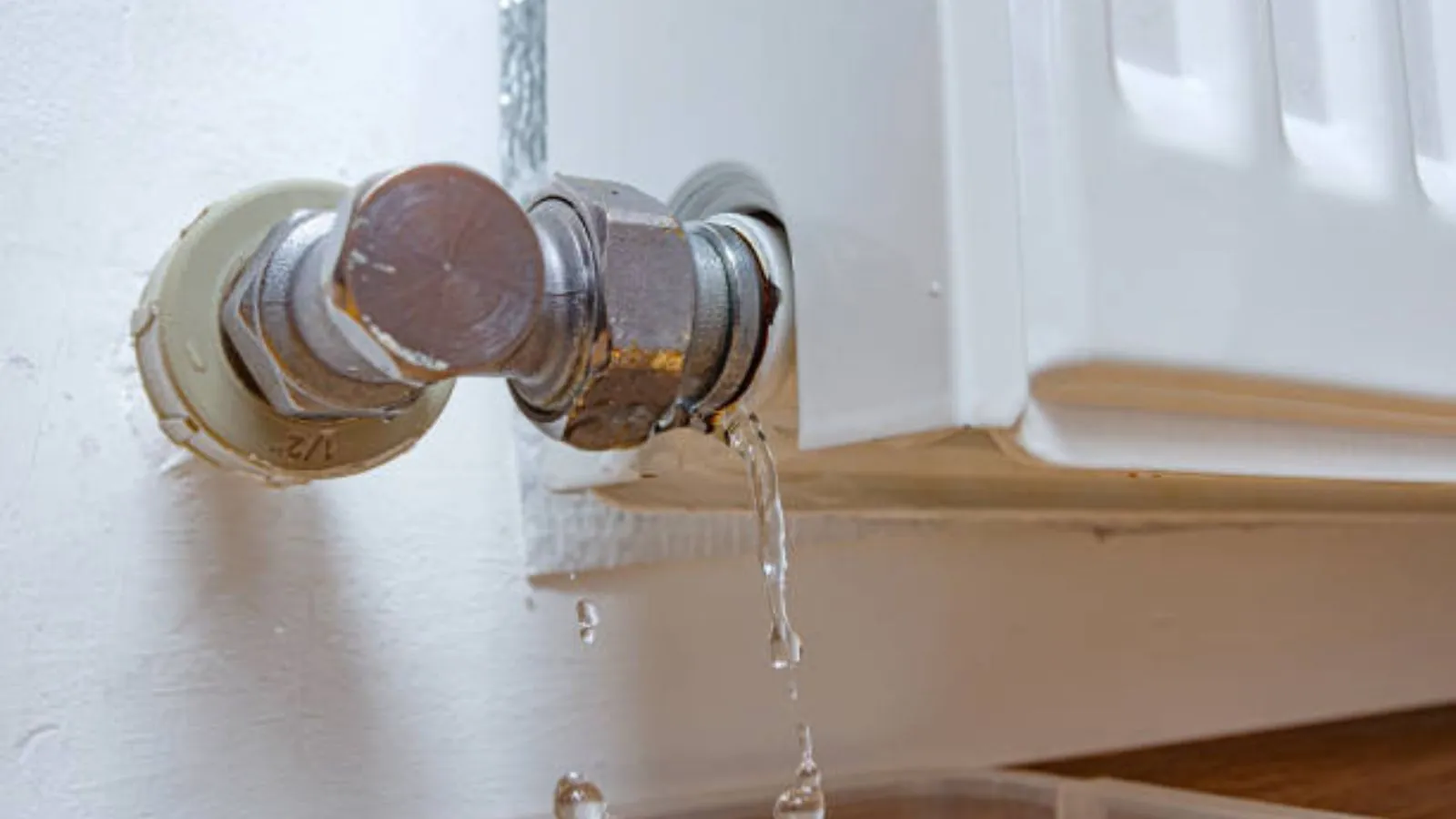
Water heater leak cleanup deals with the water a failed tank, relief valve or fitting puts onto the floor and into nearby walls. A tank holds 40 to 80 gallons, and the supply keeps feeding it after it fails. If yours is leaking in Westport right now, call our 24/7 line once you have made it safe.
Close the cold water valve on the pipe above the heater. Turn a gas control to off, or switch off the breaker for an electric unit. If you smell gas, leave the house and call the gas company or 911 before anything else.
Water heater emergency: slow drip or failed tank?
The two look different and need different responses.
- Drip at a fittingWater at the top of the tank or at a valve. Usually a plumbing repair, with minor drying if caught early.
- Relief valve dischargingWater from the pipe on the side. A pressure or temperature problem that needs a plumber soon.
- Rust-colored puddle underneathThe tank lining has failed. It will not heal, and the leak will grow.
- Sudden releaseThe tank seam opens and the full volume hits the floor. Shut the supply and call.
A plumber replaces the heater. We do not sell or install tanks. Our job is the water that left it.
Why a small tank leak causes large damage
Water heaters sit in basements, utility closets and garages, where nobody looks at them daily. A slow leak can wet the floor under the tank for weeks. In a closet on a main level, that water runs under the wall plates and into the rooms on either side.
On a well, there is a second effect. The pump keeps the system pressurized, so a split tank is fed continuously until someone closes the valve or cuts the pump breaker. Westport has little public water, so most homes here are in that situation.
Hot water also behaves differently from cold. It softens adhesives, lifts vinyl flooring and drives moisture into materials faster. Floors next to a failed heater often cup or loosen even when the puddle looked modest.
Water around the heater?
We explain what needs drying, what may need replacing and how it is priced.
How the cleanup is done
- Extract standing water from the floor and any carpet nearby
- Pull baseboards and check wall plates with a moisture meter
- Lift or remove flooring that has trapped water beneath it
- Set air movers and an LGR dehumidifier, then monitor daily
- Repair drywall at the base of the walls once readings are normal
In a basement, the cleanup connects with what our basement water damage page describes. In a main-floor closet, expect some wall and drywall repair at the bottom of the adjoining walls. If the heater shared a space with the washer, see appliance leak cleanup too.
Drying a utility space properly
Utility rooms are awkward to dry. The tank, the pressure tank, a boiler and stored boxes block airflow, and the room is usually unheated. We move what can be moved, direct air under and behind equipment, and dry the wall cavities that back onto living space.
Stored contents matter as well. Cardboard boxes on a wet floor wick water upward and grow mold within days. They come off the floor first.
What not to do around a leaking heater
- Do not relight a gas heater or reset an electric one while the floor is wet
- Do not stand in water to reach the controls
- Do not ignore a relief valve that keeps discharging
- Do not push boxes back against the wall afterward. Drying around the tank follows the S500 industry standard, with readings compared against a dry part of the house
What decides the price
- LocationA slab basement costs less than a closet above finished rooms.
- DurationA sudden release found at once costs less than a month-long seep.
- FlooringGlued vinyl, laminate and carpet often need replacement.
- Wall damageEach wet wall adds removal, drying and repair.
A sudden tank failure is often covered by homeowners insurance, though the heater itself usually is not, and slow leaks may be treated as maintenance. Ask your insurer. We serve all of Westport plus New Bedford and Acushnet.