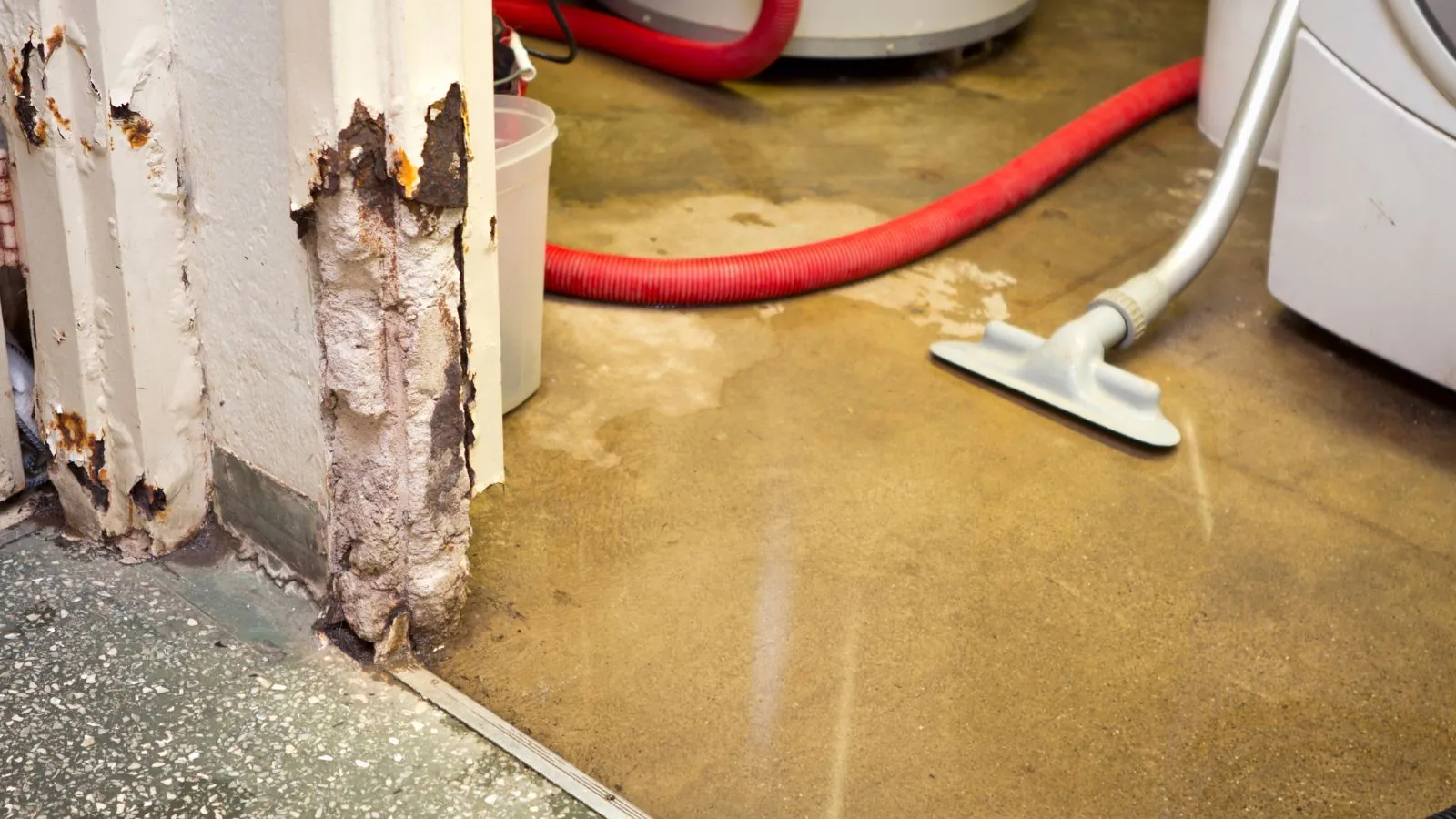
Water extraction is the physical removal of standing water from a building with pumps, truck-mounted or portable extraction units and weighted tools that squeeze water out of carpet and pad. If water is pooled in your Westport home right now, this is the job you need first, and our phone line is answered 24/7 to start it.
While you wait, stop the source if you can reach it safely. Most Westport houses draw from a private well, so the quickest shutoff is often the well pump breaker or the valve at the pressure tank. Lift what you can off the floor and keep children and pets out of the wet rooms.
When standing water is an emergency
An inch of clean water on a slab is a problem. The same inch on a wood subfloor above a finished ceiling is a bigger one, because gravity keeps working while you look for towels. Water that sits also changes category. The S500 standard treats clean supply water left in place for a couple of days as contaminated, which adds cleaning steps and cost.
Call for immediate help if any of these apply:
- Water is still entering and you cannot find or reach the shutoff
- Outlets, a panel or appliances are in or near the water
- The water came from a drain, a toilet or outdoors
- Ceilings below the wet floor are staining or sagging
If the water touches anything electrical, stay out of the room. Cut power only if you can reach the panel while standing on a dry floor, and call your electric utility or 911 for any shock or gas risk before you call us.
How we take the water out
The first visit starts with a moisture meter and a thermal camera, because the visible puddle is rarely the whole footprint. Water runs under baseboards and along sill plates, and the meter tells us how far.
- Stop and mapConfirm the source is off, then trace the wet area room by room and mark it.
- Pump the depthSubmersible pumps handle anything deeper than a few inches, usually in a basement or lower level.
- Extract the surfacesExtraction units pull water from carpet, pad, hard floors and the seams where floor meets wall.
- Set the dryingAir movers and LGR dehumidifiers go in at that first visit so drying begins while materials are still savable.
Where carpet is involved, the pad often comes out and the carpet is floated on moving air. Our carpet water damage page covers when that works and when it does not.
Need the water out tonight?
We explain what the job involves and how it is priced before any equipment comes off the truck.
What Westport homes add to the job
Two local facts shape extraction here. The town has no sewer service and very little public water, according to its 2025 Housing Production Plan, so nearly every home runs on a well and a septic system. A flooded lower level can mean a flooded septic component, and pumping water onto a saturated leach field helps nobody. We look at where the discharge goes before the pump starts.
The second fact is the coast. Low sections of East Beach Road flood about twice a year, mostly in winter, by the town's own resilience study. Salt and river water are never treated as clean, so those jobs follow the contaminated-water steps on our flood damage cleanup page.
After the water is gone
Extraction removes liquid. It does not remove the moisture already absorbed by drywall, framing and subfloor, which is why structural drying follows on nearly every job. Skipping that stage is how a cleaned-up leak turns into a musty room three weeks later.
What decides the price
- Water categoryClean supply water costs less to handle than drain, septic or outdoor water.
- Depth and areaPumping a basement is a different job from extracting one bedroom carpet.
- MaterialsCarpet and pad, hardwood, tile over slab and finished ceilings each respond differently.
- AccessCrawl spaces, tight stairs and long hose runs add time.
Sudden and accidental water damage is often covered by a homeowners policy, while outdoor flooding usually needs separate flood coverage. Check your policy or ask your insurer. We serve Westport and also take calls from New Bedford and Acushnet.