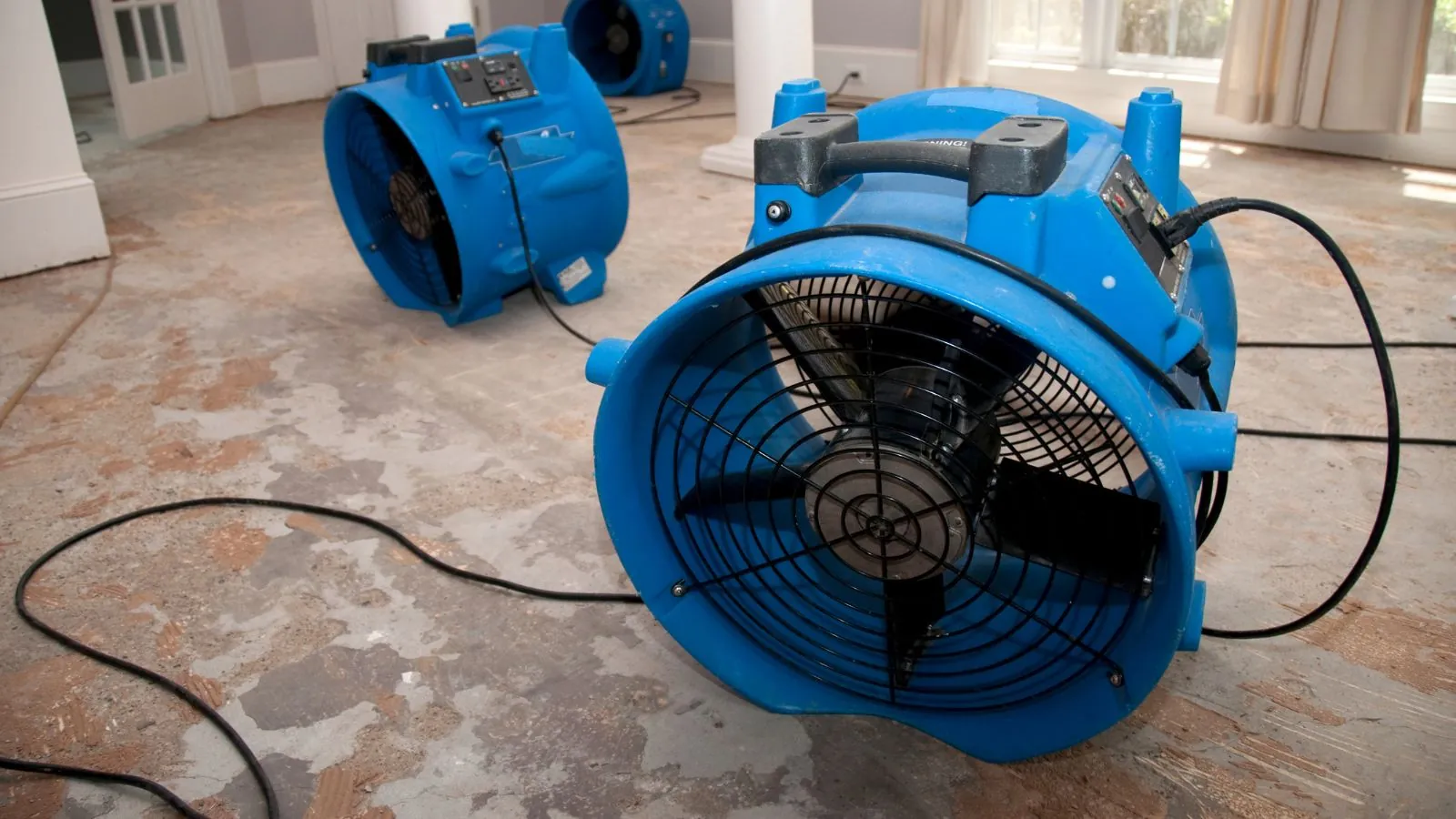
Carpet water damage restoration is the process of extracting water from carpet, dealing with the pad beneath it, drying the subfloor and cleaning the carpet so it can stay in the room. Whether carpet in a Westport, MA home can be kept depends on two things: what kind of water soaked it and how long it stayed wet.
Can this carpet be saved?
| Water source | Time wet | Usual decision |
|---|---|---|
| Clean supply line | Under two days | Carpet kept, pad often replaced |
| Clean supply line | Several days | Assess for odor and backing damage |
| Washer or dishwasher drain | Any | Carpet may be kept after cleaning, pad replaced |
| Sewage, river or tidal water | Any | Carpet and pad both discarded |
This follows the water categories in the S500 standard. Clean water that sits does not stay clean, which is why time appears in the table.
Why the pad is the problem
Carpet fiber dries quickly once water is pulled from it. Pad is a foam sponge sitting on the floor, trapped under the carpet. It holds several times its weight in water and releases it slowly. Leaving wet pad in place keeps the subfloor wet and the underside of the carpet damp.
So the common approach is to lift the carpet at one edge, cut out and remove the wet pad, extract and dry the subfloor, then install new pad and re-stretch the carpet. Pad is inexpensive. The subfloor is not.
Signs the water went further than you thought
- The carpet feels dry on top but squishes when you press hard
- Tack strip along the wall is dark or rusty
- Baseboards have swollen at the bottom edge
- A smell develops two or three days after the leak
- The carpet backing separates from the face when pulled back
Water under carpet runs to the walls and wicks into the drywall. Our wall and drywall page covers what happens at the baseboard.
Want to know what is under the carpet?
We lift a corner, take readings and explain the options and pricing.
How wet carpet is restored
- ExtractWeighted extraction tools press water out of carpet and pad together where pad can stay, or from carpet alone.
- Lift and remove padCarpet is released from the tack strip, and saturated pad is cut out and bagged.
- Dry the subfloorAir movers and an LGR dehumidifier dry the plywood or concrete, verified by moisture meter.
- Float or lay the carpetCarpet is dried with air moving above and beneath it.
- Reinstall and cleanNew pad, re-stretch, seam repair and a hot water extraction cleaning.
The first step is the same work described on our water extraction page. When the carpet sits on a slab below grade, the job overlaps with basement water damage cleanup.
Closets, stairs and odd corners
Closet carpet is a frequent call. It is often on a shared wall with a bathroom or an air handler, gets little airflow and is covered by boxes and shoes. A leak there can go unnoticed until the smell arrives.
One scenario comes up repeatedly: a neighbor's sprinkler or an outdoor line wets an exterior wall and the closet carpet behind it. Outdoor water of that kind is not clean supply water, so the pad is replaced and the carpet cleaned before it is relaid.
When carpet has already been wet for days
If you pulled back carpet and found dark spotting on the backing, the tack strip or the subfloor, stop and leave it folded back. That may be mold. It needs moisture to grow, so the source is fixed first, and removal follows the approach on our mold remediation page. Health questions belong with your physician.
Seasonal houses and carpet
In a town whose housing plan counts 7 in every 100 homes as seasonal, some carpet losses are discovered long after they happened. Carpet in a closed house that sat wet for weeks is not a restoration candidate. It is removed, and the work focuses on the subfloor and walls.
What to do while you wait
- Lift furniture onto blocks, or slip foil under the legs, so stain does not transfer
- Pick up anything that can bleed dye: rugs, books, cardboard
- Keep foot traffic off the wet area so backing and seams are not stressed
- Do not use a household vacuum on standing water
What affects the cost
- Water categoryClean water work costs less than contaminated.
- AreaNumber of rooms and whether stairs are involved.
- SubfloorPlywood dries faster than a slab.
- ReinstallationRe-stretching, seams and transitions take skill and time.
Sudden leaks are often covered by insurance, and carpet replacement may be subject to depreciation under some policies. Ask your insurer. We work in Westport and in New Bedford and Acushnet.