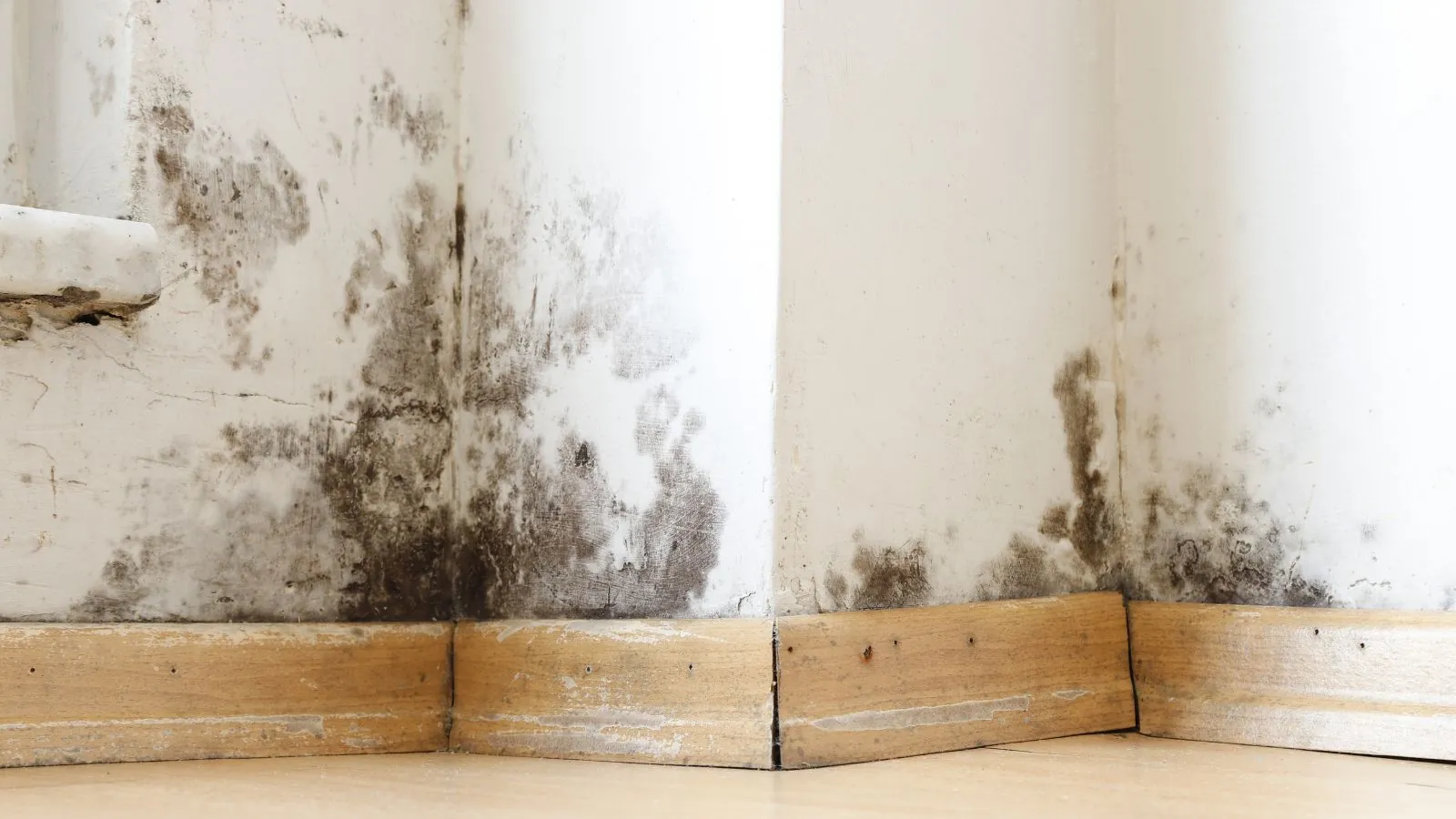
The leak was fixed weeks ago. The floor looks fine. And yet the room smells like a damp cellar, especially on humid days or first thing in the morning. This guide explains what that smell is and how to remove its cause.
What the smell is
The musty odor comes from compounds released by mold and bacteria as they grow on damp materials. You do not need to see growth to smell it. A small colony inside a wall cavity or under a carpet produces a noticeable odor in a closed room.
So the smell tells you two things. Something organic is damp, and it has been damp long enough for microbial growth to start.
Why it shows up after the leak is fixed
Fixing a pipe stops new water. It does nothing about the water already inside materials. Surfaces dry in a day or two. The inside of a wall, the underside of a subfloor and a carpet pad can stay damp for weeks.
Humid weather makes it worse. Materials that were nearly dry take moisture back from the air, and the growth becomes active again.
Where the damp usually hides
- Carpet padThe foam layer holds water long after the carpet above feels dry.
- Bottom of wallsDrywall wicks water up from the floor, and the insulation behind it stays wet.
- Under cabinetsThe void behind a kitchen or bathroom toe kick has no airflow.
- SubfloorPlywood beneath vinyl, laminate or tile dries slowly because the covering traps moisture.
- ClosetsLittle air movement, plus boxes and clothing that absorb moisture.
- Basements and crawl spacesConcrete, block and soil release moisture for a long time.
A simple way to narrow it down
- Close the room for a few hours, then walk in. Is the smell stronger at floor level or head height?
- Open closets and cabinets one at a time and smell inside each.
- Press along baseboards for soft spots or swelling.
- Lift a corner of carpet in the suspect area and check the pad and tack strip.
- Look at the ceiling of the room below.
Stronger at floor level points to flooring, pad or wall bases. Stronger in one closet points to that wall. A smell that fills the house when the heat or cooling runs points toward ductwork or the air handler.
What not to do about the smell
- Do not paint or seal over a stain to trap the odor
- Do not run an ozone machine in rooms people or pets use
- Do not pull up carpet or open walls if you can already see growth. Close the room and have it assessed under S520 practice
Why masking fails
| Approach | What it does | Result |
|---|---|---|
| Air freshener, candles | Adds scent | Smell returns |
| Baking soda, charcoal | Absorbs some odor | Temporary |
| Ozone machine | Reacts with odor molecules | Does not dry or remove growth. Unsafe in occupied rooms |
| Household fan | Dries surfaces | Leaves cavities damp |
| Dehumidifier | Lowers room humidity | Helps, but may not reach inside walls |
| Find, dry and remove | Addresses the damp material | Lasting |
Only the last row is a fix. The others buy time.
Getting rid of it properly
The method is the same one used after any water loss. Find the damp material with a moisture meter. Open the cavity if needed. Remove what cannot be dried, such as pad and wet insulation. Dry the rest with air movement and dehumidification until readings match a dry part of the house. Clean remaining surfaces.
If visible mold is found, it is removed under containment before anything is closed up. Mold needs moisture, so drying is what keeps it from returning. No one can promise it never will.
Why This Is So Common In Westport Houses
Two things about the town make lingering odor a frequent complaint. First, the setting: the town's own description places Westport on the east and west branches of the Westport River, with beaches on the open coast. Summer air here is damp, and a material that is only slightly wet will stay that way.
Second, vacancy. The town says summer residents raise the population by nearly one quarter, and its 2025 Housing Production Plan puts seasonal units at 7 percent of the housing stock, citing Census estimates. A house closed for months after a small autumn leak is exactly where a musty smell develops unnoticed.
If you open a seasonal house and it smells musty, do not just air it out. Find out what got wet over the winter. Source types: the town's description of itself and the town housing plan.
When to get help
Call for readings if the smell has lasted more than a couple of weeks, if it is getting stronger, if you can see staining or growth, or if the original leak involved a drain, sewage or outdoor water.
Our structural drying page explains the measurement and equipment, and mold remediation covers what happens when growth is found. We serve Westport, Acushnet and New Bedford.