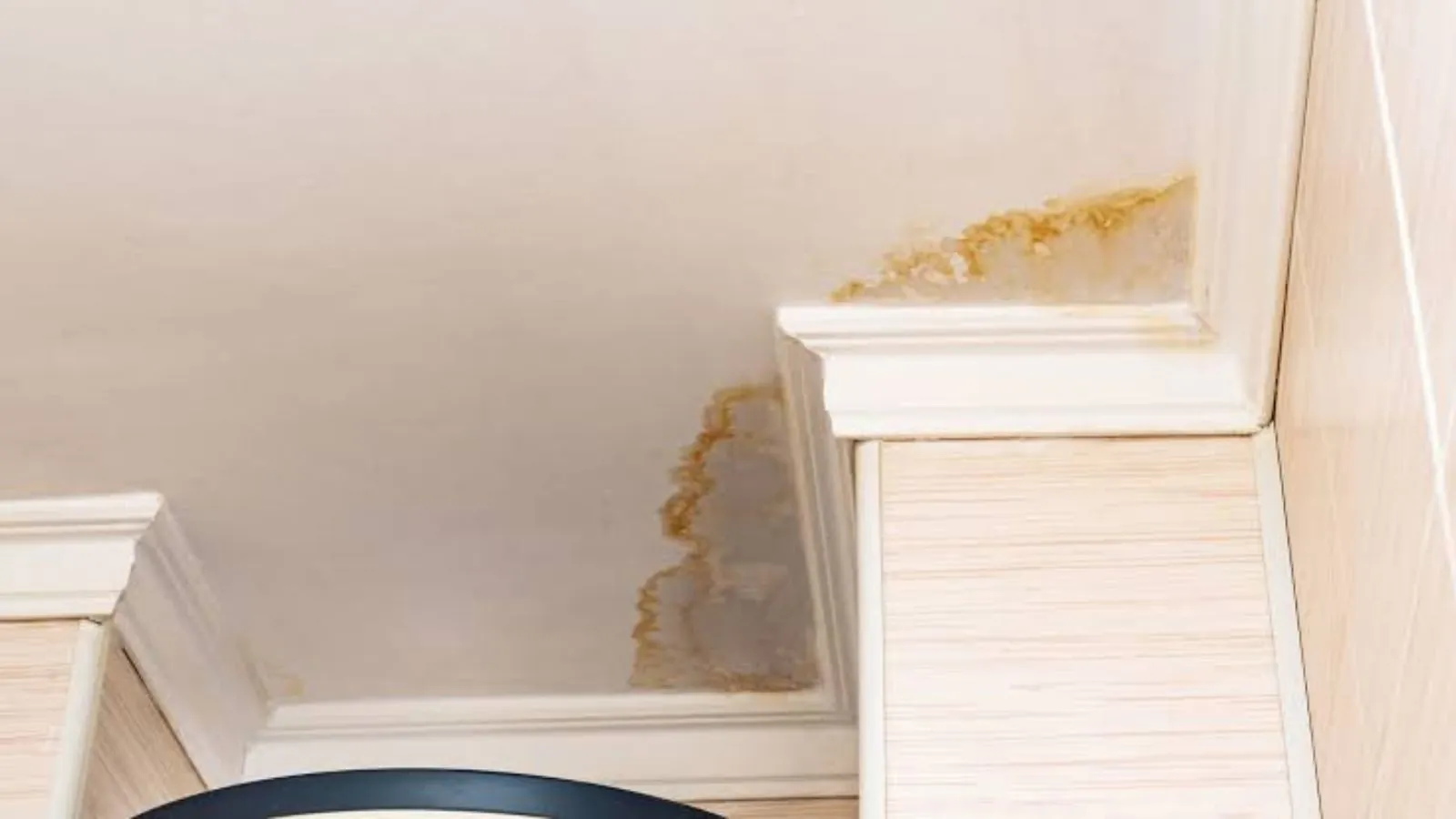
This guide is for a showing or a second visit. It does not replace a licensed home inspection. It helps you notice things worth asking the inspector and the seller about.
Use your nose first
Walk in and breathe before you look at anything. A musty or earthy smell means moisture somewhere. Heavy air freshener, candles in every room or all the windows open on a cold day can be attempts to cover one. Go back to the basement and closets and smell again.
Ceilings and walls
- Look for rings, yellow or brown patches, and areas of newer paint that do not quite match
- Sight along ceilings for sagging between joists
- Check the tops of walls on the upper floor, especially near chimneys and below valleys in the roof
- Look under every window for staining or bubbled paint
- Run a hand along baseboards for swelling, gaps or soft spots
A single patch of fresh paint on an otherwise aged ceiling deserves a question. Ask what happened and what was done about the source.
Floors
Walk slowly and feel for changes. Soft or springy areas near toilets, tubs, dishwashers and exterior doors suggest a subfloor that has been wet. Hardwood boards that are raised at the edges have taken on moisture from below. Laminate with swollen seams has been wet from above. Dark staining at board joints is a long-term leak.
Kitchens and baths
Open every sink cabinet. Look at the cabinet floor for rings, swelling or new shelf liner. Feel the back wall. Check the toe kick. In bathrooms, press the floor around the toilet base and look at the ceiling of the room below. Examine caulk and grout, and look at the wall behind the shower from the adjoining room if you can.
Basement and crawl space
| What you see | What it may mean |
|---|---|
| White powdery deposits on walls | Water has moved through the masonry |
| A horizontal stain line on walls or posts | Past standing water |
| Rust at the base of the furnace, heater or steel posts | Repeated wetting |
| New paint or paneling on only the lower walls | Possibly covering stains |
| Dehumidifier running | Owner is managing dampness |
| Items stored on blocks or pallets | Owner expects water |
| Sump pit | Groundwater is a known factor |
None of these is disqualifying. Each is a question. How often does water come in, how deep, and what was done?
Attic
If you can look in safely, check the underside of the roof for dark stains, especially around the chimney and vents. Look for matted or discolored insulation and for daylight where it should not be.
Questions to ask the seller
- Has the house ever had water damage, a flood or a pipe break?
- Was an insurance claim filed, and is there a record of the repair?
- Has there been any mold, and was it professionally removed?
- How old are the roof, the water heater and the well pump?
- Does the basement take water, and under what conditions?
- Is the house occupied year-round?
Westport Checks That Other Towns Do Not Need
There is no sewer service in Westport and only minimal public water, the town's 2025 Housing Production Plan says. Nearly every sale here involves a private well and a septic system, and both deserve their own inspection.
On septic, the town has told residents that cesspools must be upgraded to Title 5 standards and has set deadlines for doing so. Ask the Westport Board of Health what applies to the property and whether a system inspection is on file.
On wells, the same housing plan notes PFAS contamination in well water near Route 6, with a water line expansion under way in that corridor. Ask for recent water test results wherever the house is.
On flooding, look up the address on the FEMA Flood Map Service Center. The town's resilience study records repeated flooding along East Beach Road, and local reporting described Westport Point flooding in January 2024. A lender will require flood insurance in mapped high-risk zones, and the premium belongs in your budget. Source types: the town housing plan, the town's public water and sewer FAQ, the town's resilience study and local news reporting.
Seasonal houses
If the property has been used seasonally, ask how it was closed each winter and who checked on it. Houses that sit empty are where slow leaks run longest. Look harder at ceilings below bathrooms and at floors around the water heater and pressure tank.
What to do if you find something
A finding is not a reason to walk away. It is a reason to learn more. Options include asking the seller for repair records, having your inspector look more closely, or getting a moisture assessment so you know whether materials are wet now or the stain is old and dry.
A moisture meter separates the two in minutes. A dry old stain is cosmetic. A wet one means an active problem.
After you buy
Find the well pump breaker, the pressure tank valve and the shutoff under each sink on the day you move in. Label them.
Our pages on wall and drywall repair and basement water damage cleanup explain what repairs involve if you inherit a problem. We serve Westport, New Bedford and Acushnet.